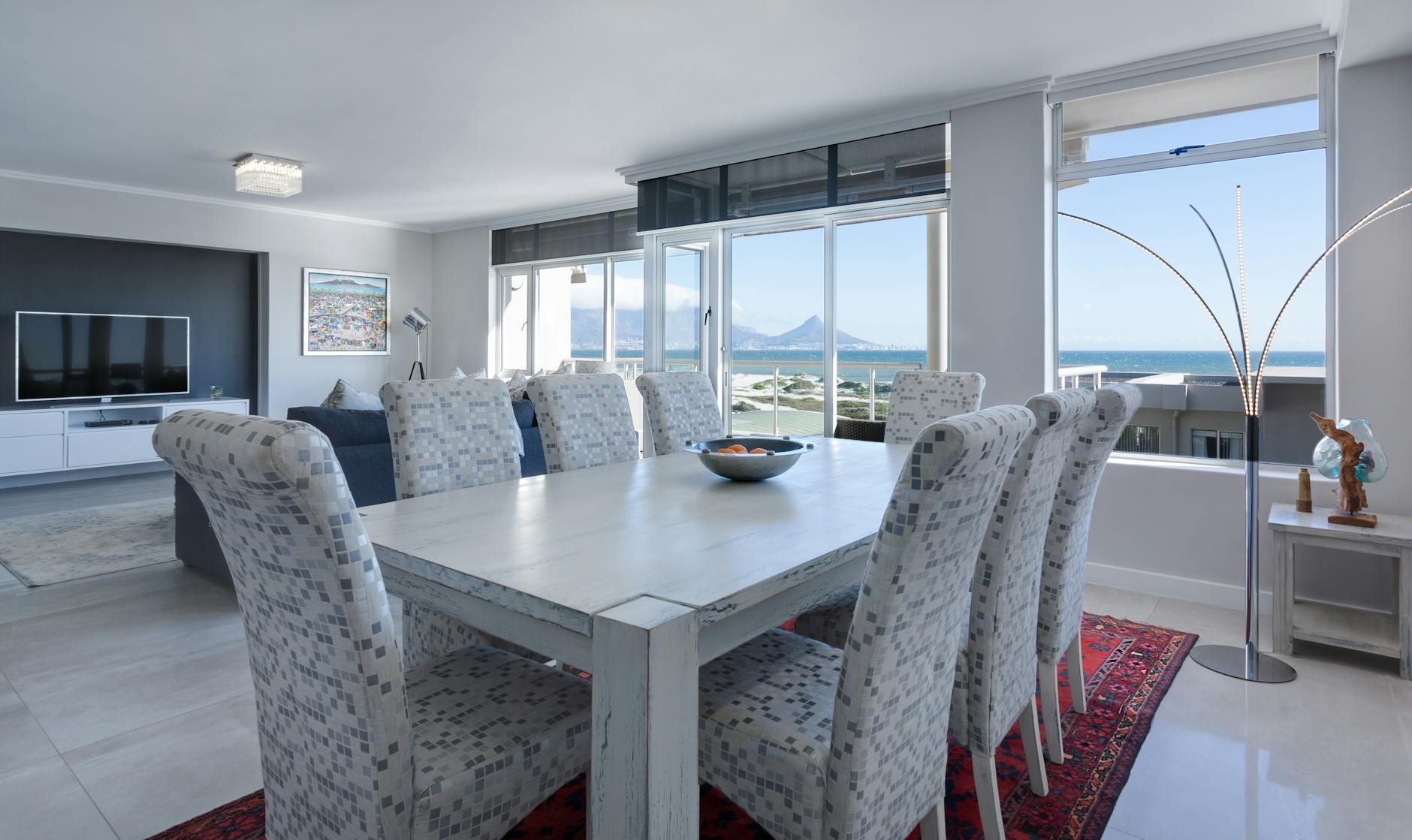
How to Sell Your House in South Africa: A Complete Guide
Selling property in South Africa involves understanding valuation, marketing, compliance and legal costs. This complete guide walks you through every step


Selling property in South Africa involves understanding valuation, marketing, compliance and legal costs. This complete guide walks you through every step to sell your house efficiently and avoid common pitfalls.
The KILICASA Team · Published August 2026
Quick answer: Selling a house in South Africa requires correct pricing, legal compliance, effective marketing and managing costs like commission, transfer fees and capital gains tax. The average sale takes 90–110 days from listing to registration, but thorough preparation can shorten this significantly.
Table of Contents
- Chapter 1: Pricing Your Home Right
- Chapter 2: Legal Compliance & Certificates
- Chapter 3: Marketing & Presentation
- Chapter 4: Understanding Selling Costs
- Chapter 5: Choosing an Agent & Mandate Type
- Chapter 6: Offers & Negotiation
- Chapter 7: The Transfer Process
- Chapter 8: Best Time to Sell
- FAQ
- Conclusion
Chapter 1: Pricing Your Home Right
Accurate property valuation is the single most important factor in selling your house quickly and for the best price. Overpricing leads to fewer viewings, longer time on market and ultimately a lower sale price. Underpricing leaves money on the table. The goal is to price competitively while reflecting true market value.
Key elements affecting valuation:
- Location and suburb price trends
- Property size, condition and age
- Recent comparable sales (comps)
- Economic conditions and interest rates
- Seasonality and market demand
Getting a Free Property Valuation
Several options exist for estimating your home's worth:
- Online valuation tools: Quick but general estimates based on data averages.
- Estate agent appraisals: Local expertise and access to recent sales data.
- Professional valuations: Detailed reports for serious sellers.
Free Property Valuation Options Compared
| Option | Accuracy | Cost | Speed | When to Use |
|---|---|---|---|---|
| Online tools | Moderate | Free | Instant | Initial idea, not listing |
| Agent appraisal | High | Free (if listed) | 1-2 days | Serious sellers |
| Professional surveyor | Very high | R2,000–R5,000 | 1-2 weeks | Disputes or investments |
According to Lightstone data, properties priced within 5% of their final sale price achieve 80% faster sales than those overpriced by 10% or more. In Johannesburg's northern suburbs, the average days on market drops from 75 days at correct pricing to over 120 days when overpriced.
Chapter 2: Legal Compliance & Certificates
South African property law requires several compliance certificates before a sale can proceed. These protect both buyer and seller and are mandatory for transfer registration. Without them, your sale cannot complete at the Deeds Office.
Required Certificates
| Certificate | Validity | Cost | Responsible Party |
|---|---|---|---|
| Electrical Compliance Certificate (ECOC) | 3 months | R1,500–R3,500 | Seller |
| Beetle Certificate (woodborer) | 6 months | R500–R1,200 | Seller |
| Plumbing Certificate | 6 months | R800–R1,500 | Seller |
| Gas Certificate | 5 years | R600–R1,200 | Seller |
| Occupancy Certificate | Permanent | R500–R2,000 | Seller |
All certificates must be issued by registered professionals and cover issues present at the time of inspection. In Cape Town, the City requires an additional water installation certificate for properties with swimming pools or irrigation systems installed after June 2015.
Primary Residence Exclusion for Capital Gains Tax
Capital Gains Tax (CGT) applies to property sales where the property is not your primary residence. The primary residence exclusion allows exclusion of up to R1.8 million from CGT calculations (R3.6 million for spouses married in community of property), provided the property was your main home for the entire ownership period.
If you rent out part of your home or own multiple properties, the exclusion may be reduced proportionally. SARS requires documentation proving primary residence status, including utility bills, municipal accounts and voter registration records.
Chapter 3: Marketing & Presentation
Effective marketing combines online exposure with physical presentation. Modern buyers research properties extensively online before attending viewings, making digital presence crucial while traditional methods remain valuable.
Selling Your House Fast: Strategies That Work
To sell quickly, implement these proven tactics:
- Professional photography: Listings with professional photos receive 65% more online views.
- Virtual tours: Properties with virtual tours sell 30% faster on average.
- Curb appeal enhancement: Simple landscaping and exterior maintenance increase perceived value by 5–10%.
- Decluttering and staging: Staged homes sell for 6–25% more than unstaged ones.
- Flexible viewing schedule: Accommodating weekend and evening viewings increases serious buyer interest.
Show Day Tips for Sellers
Maximise your show day impact:
- Remove personal items and family photos
- Ensure all rooms are clean and tidy
- Maintain consistent temperature throughout the house
- Light candles or use subtle air fresheners
- Park vehicles neatly in the garage or driveway
- Keep pets secured during viewings
Private Sale vs Estate Agent: A Detailed Comparison
| Factor | Private Sale | Estate Agent Sale |
|---|---|---|
| Commission Cost | None | 5–7% + VAT |
| Marketing Reach | Limited | National portals + local network |
| Negotiation Expertise | You decide | Professional representation |
| Legal Knowledge | Your responsibility | Agent guidance available |
| Time Investment | High (marketing, viewings, follow-ups) | Minimal (agent handles most tasks) |
| Potential Sale Price | Depends on your skill | Professional pricing advantage |
| Compliance Handling | DIY risk | Agent assistance with certificates |
Recent data shows that while private sales can save commission costs, they typically take 30–40% longer to complete and achieve 8–12% lower final prices compared to agent-assisted sales, particularly in Gauteng and KwaZulu-Natal markets.
Chapter 4: Understanding Selling Costs
Selling costs extend far beyond agent commission. Understanding all expenses helps you calculate your net proceeds accurately and make informed decisions.
Estate Agent Commission in South Africa
The standard commission structure varies by province but typically ranges from 5–7% plus VAT. The National Association of Realtors of South Africa (NARSA) recommends the following tiered structure:
- First R1 million: 6% + VAT
- Next R1 million: 5% + VAT
- Balance over R2 million: 4% + VAT
For a R1.5 million property, total commission would be approximately R85,000 plus VAT. Some agencies offer discounted rates or performance-based commission models.
Bond Cancellation Costs
If you have an existing bond on the property, cancellation costs apply. These typically include:
- Bank administration fee: R500–R2,000
- Early settlement fee: 3 months interest (varies by lender)
- Attorney fees: R3,000–R8,000
- Total estimated range: R5,000–R15,000
According to SARB data, average bond cancellation costs in 2025 were R9,200 across all major banks. It's advisable to request a settlement quotation at least 14 days before expected transfer date.
Calculating Your Net Proceeds
| Item | Typical Amount |
|---|---|
| Gross Sale Price | R1,500,000 |
| Estate Agent Commission (6% + VAT) | -R95,400 |
| Bond Cancellation Costs | -R9,200 |
| Compliance Certificates | -R4,500 |
| Deeds Office Transfer Fees | -R12,500 |
| Capital Gains Tax* | -R45,000 |
| Estimated Net Proceeds | R1,333,400 |
*Assuming no primary residence exclusion applies
Chapter 5: Choosing an Agent & Mandate Type
The mandate agreement determines how your property is marketed and for how long. Choosing the right agent and mandate type significantly impacts your sale outcome.
Sole Mandate vs Open Mandate
Understanding the key differences helps you make an informed decision:
| Feature | Sole Mandate | Open Mandate |
|---|---|---|
| Marketing Control | Exclusive to one agent | Multiple agents compete |
| Commission Structure | Full rate guaranteed | May be lower or split |
| Marketing Effort | Single coordinated campaign | Potentially broader reach |
| Legal Protection | Stronger contractual rights | More complex disputes |
| Risk of Dual Commission | None | High |
In Pretoria's competitive market, sole mandate properties achieve higher average sale prices (R1.35 million) compared to open mandate properties (R1.18 million), according to Q2 2025 data from the Institute of Estate Agents of South Africa.
Selecting a Qualified Property Practitioner
Verify credentials before signing:
- Check FFC (Fidelity Fund Certificate) validity on PPRA website
- Confirm active registration status
- Review recent sales track record in your area
- Compare commission rates and services offered
- Read client testimonials and references
Chapter 6: Offers & Negotiation
Receiving and evaluating offers requires understanding the components of an Offer to Purchase (OTP) in South Africa. The strongest offer isn't always the highest price.
What Makes a Strong Offer to Purchase
A competitive OTP includes:
- Cash or pre-approved financing status
- Minimal conditions suspensive
- Reasonable deposit amount (5–10%)
- Short transfer period (30–45 days)
- Proof of immediate bankability
In Durban's Berea area, properties receiving cash offers or offers with minimal conditions closed 40% faster in 2025 compared to standard financed offers.
Negotiating with Multiple Offers
When multiple offers arrive:
- Set a clear deadline for final offers
- Request highest and best offers from serious buyers
- Evaluate total package, not just price
- Consider non-financial terms (transfer timeline, deposit size)
- Communicate decisions promptly and professionally
Chapter 7: The Transfer Process
The transfer process in South Africa involves three parties: seller's attorney, buyer's attorney and the Deeds Office. Understanding each step helps manage expectations and timelines.
Step-by-Step Transfer Timeline
- Day 1–3: OTP signed, deposit paid to trust account
- Day 4–10: Transfer documents prepared by seller's attorney
- Day 11–15: Documents executed and lodged at Deeds Office
- Day 16–35: Deeds Office processing (varies by area)
- Day 36–40: Registration and occupation
In Johannesburg, the deed transfer process averages 35 days. In rural areas or smaller towns, processing can extend to 50–60 days due to limited Deeds Office capacity.
Chapter 8: Best Time to Sell Your Property
Market timing affects both sale price and speed. Understanding seasonal trends helps optimize your listing strategy.
Seasonal Analysis of the South African Property Market
National trends show:
| Season | Average Sale Price Premium | Days on Market | Best For |
|---|---|---|---|
| Spring (September-November) | +3.5% | 65 days | All property types |
| Summer (December-February) | +1.2% | 75 days | Luxury properties |
| Autumn (March-May) | -1.8% | 85 days | Budget properties |
| Winter (June-August) | -4.2% | 95 days | Investment properties |
Data from the Bond Originators Association shows spring listings achieve 12% more viewings than winter listings, primarily due to improved lighting conditions and buyer activity after holiday periods.
Frequently Asked Questions
Can I sell my house without an agent?
Yes, but you'll handle marketing, viewings, negotiations and compliance yourself. While you save commission, property data from Lightstone shows private sales average 10% longer on market and achieve 8% lower prices than agent-assisted sales.
How much notice do I need to give for bond cancellation?
Banks require minimum 14 days' notice for bond cancellation requests. Requesting the settlement quotation early prevents delays in the transfer process and allows time to address any outstanding amounts.
What happens if my property doesn't pass compliance inspections?
If certificates reveal issues, you must either fix them before sale or adjust the sale price accordingly. Major electrical faults or structural problems may prevent transfer registration until resolved.
Conclusion: Your Path to a Successful Sale
Selling property in South Africa successfully requires balancing accurate pricing, legal compliance, effective marketing and managing costs. Key takeaways include:
- Invest in proper valuation to avoid costly pricing mistakes
- Obtain all compliance certificates early in the process
- Choose your selling approach (agent vs private) based on your skills and timeline
- Understand all costs including commission, transfer fees and CGT implications
- Market strategically with professional photography and staging
- Negotiate offers based on total package strength, not just price
- Plan for transfer timelines that vary by location
- Time your listing with market seasons for optimal results
By following this comprehensive guide, you can navigate the complexities of the South African property market with confidence. Remember that every property and situation is unique – consider consulting with qualified professionals for personalized advice regarding your specific circumstances.
Next step: Calculate your estimated net proceeds using our free property valuation tool available on KILICASA.
Ready to sell your property smarter? Join KILICASA today and access tools that simplify every stage of your South African property sale. KILICASA →